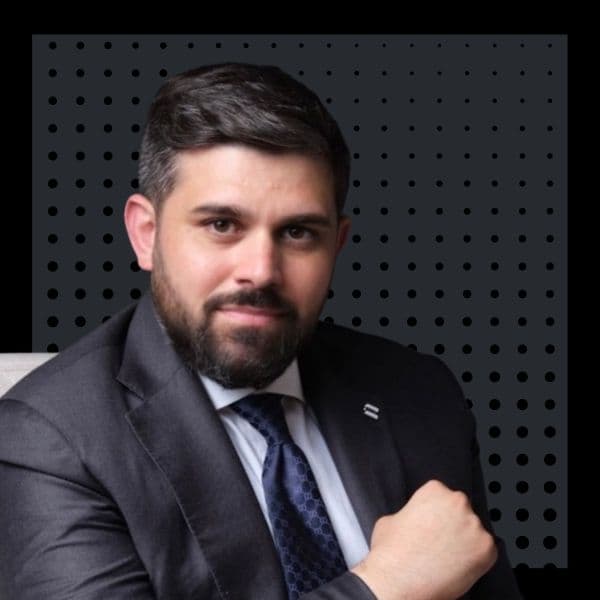
Nicola Fabiano
Lawyer · AI Ethicist & Researcher
Biography
Nicola Fabiano is an Italian lawyer, Adjunct Professor, AI and AI ethicist researcher with a distinguished career spanning legal practice, academia, and international advisory roles in data protection and artificial intelligence. He is the Founding Partner of Studio Legale Fabiano, entitled to represent clients before the Italian High Courts, specializing in civil and digital law with a focus on data protection, GDPR, the EU AI Act, cybersecurity, and legal technology. His affiliations include membership in the United Nations University Global AI Network, coordinated by UNU Macau, and the International Neural Network Society (INNS). Fabiano has made significant contributions to data protection and privacy. He previously held the position of President of the San Marino Data Protection Authority, where he personally drafted San Marino's data protection Law No. 171/2018, and acted as a national expert for the Republic of San Marino on various Council of Europe committees, notably including the "Ad hoc Committee on Artificial Intelligence." His expertise is further underscored by his development of the Data Protection and Privacy Relationships Model (DAPPREMO), which operationalizes data protection, privacy, and AI compliance. He is a certified Data Protection Officer under the UNI CEI EN 17740:2024 standard, a ForHumanity AI Act Certified Auditor, and a member of the EDPB Support Pool of Experts (Field B). As an author, Fabiano has published numerous articles, essays, and books, including scientific contributions on arXiv (arXiv:2404.00600; arXiv:2509.20153). His book "Artificial Intelligence, Neural Networks and Privacy: Striking a Balance between Innovation, Knowledge, and Ethics in the Digital Age," published in 2025, addresses the complex interplay between AI, privacy, and ethical considerations, particularly in light of the European AI Act. His professional memberships include the IEEE, where he contributes to standardization work on ethically driven robotics and automation systems, as well as the European AI Alliance and ForHumanity. He is also President of CINFOR (Centro per l'Informatica e l'Innovazione Forense), an institutional body of the Bar Association of Foggia. His role as an AI Ethicist and Researcher aligns with international efforts on human-centered AI governance, underscoring his commitment to ensuring that technological advancements serve human well-being and uphold ethical principles.