The rapid evolution of artificial intelligence brings new challenges in terms of security, ethics, and social impact, as demonstrated by a series of recent events ranging from legal actions to security breaches and professional concerns.
What happened
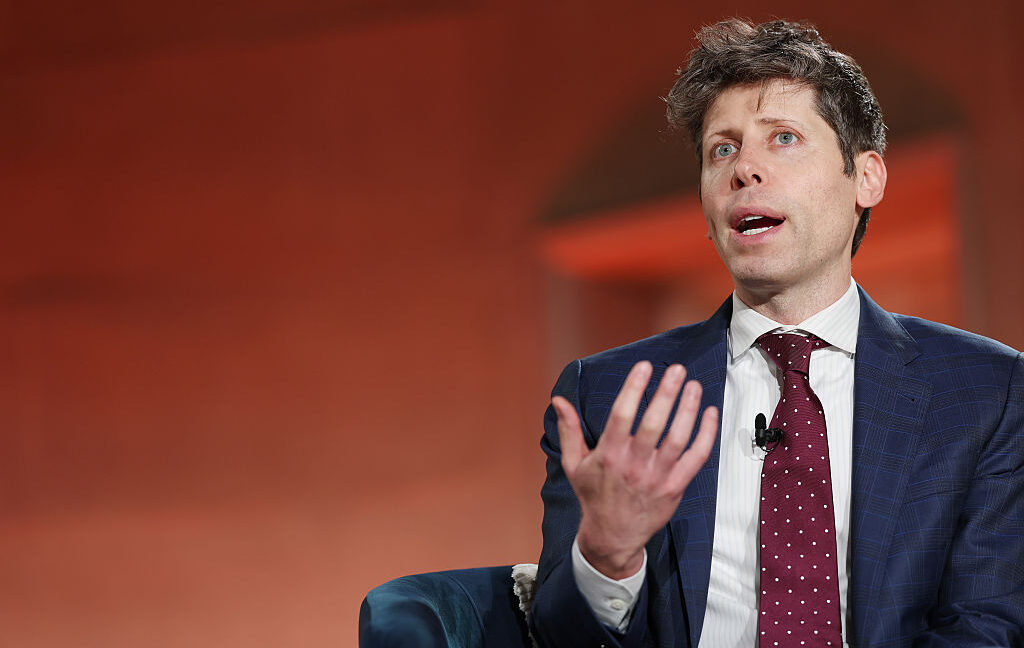
The State of Florida has filed a lawsuit against OpenAI and its CEO Sam Altman, accusing them of "utter disregard" for human lives in connection with murders linked to ChatGPT Florida sues OpenAI, Sam Altman after multiple ChatGPT-linked murders. This raises fundamental questions about the responsibility of AI creators for the misuse or harmful application of their tools.
Concurrently, a Meta AI support chatbot was tricked by hackers, who gained access to several celebrity Instagram accounts, which were then resold before Meta patched the vulnerability Hackers duped Meta AI support chatbot to steal celebrity Instagram accounts. This incident underscores the security fragilities even in AI systems designed for assistance.
Beyond security and legal responsibility, the impact on the world of work is also under scrutiny. The International Mathematical Union has expressed concern about the threats AI poses to the profession of mathematicians, with the tech industry increasingly encroaching on their field Mathematicians warn of AI threats to profession as industry encroaches. Amidst growing risks, solutions are also emerging: Google announced that Android phones will soon be able to detect spoofed calls and impersonation scams, using AI to protect users Android phones will soon be able to detect spoofed calls and impersonation scams.
Why it matters
These events demonstrate that AI is no longer a futuristic technology but a present force with concrete and immediate implications for people's lives. The Florida lawsuit against OpenAI is a wake-up call for defining the ethical and legal responsibility of AI developers, especially when their models can be used for malicious purposes. This is not just a technical problem; it is a problem of governance and ethical design from the earliest stages of development.
Vulnerabilities in support chatbots, like Meta's, highlight that even the simplest AI interfaces can become vectors for sophisticated attacks, risking personal data and digital property. User trust in AI systems directly depends on their security and companies' ability to protect them.
The mathematicians' concerns, on the other hand, reflect a broader debate about the impact of AI on the future of work. While AI can increase efficiency, it also raises questions about professional reskilling and the need to protect unique human skills. Google's ability to implement defenses against AI-powered scams shows that technology can also be part of the solution, but it requires proactive and constant commitment.
The HDAI perspective
Recent incidents reinforce the belief that AI development cannot proceed without a robust framework of ethical AI and governance. The vision of Human Driven AI is clear: technology must serve humanity, not endanger it. It is crucial for companies and legislators to collaborate in establishing standards for safety, transparency, and accountability that protect individuals and society. The discussion about who is responsible when AI causes harm is critical and will be a central theme at the HDAI Summit 2026 in Pompeii.
We cannot afford to ignore the ethical and social implications of AI, nor to completely delegate control to autonomous systems. Innovation must be accompanied by deep reflection on human values and the protection of fundamental rights. Only then can we build a future where AI is a true tool for progress, guided by principles of fairness and security.
What to watch
It will be crucial to observe the developments in Florida's lawsuit against OpenAI, as it could set a significant precedent for the legal responsibility of AI developers. Simultaneously, the industry will need to accelerate the adoption of "security-by-design" practices and invest in research to mitigate the risks of misuse and cyberattacks. The response of governments and international bodies, such as the EU AI Act, will be decisive in shaping a future where AI is developed and used responsibly.