
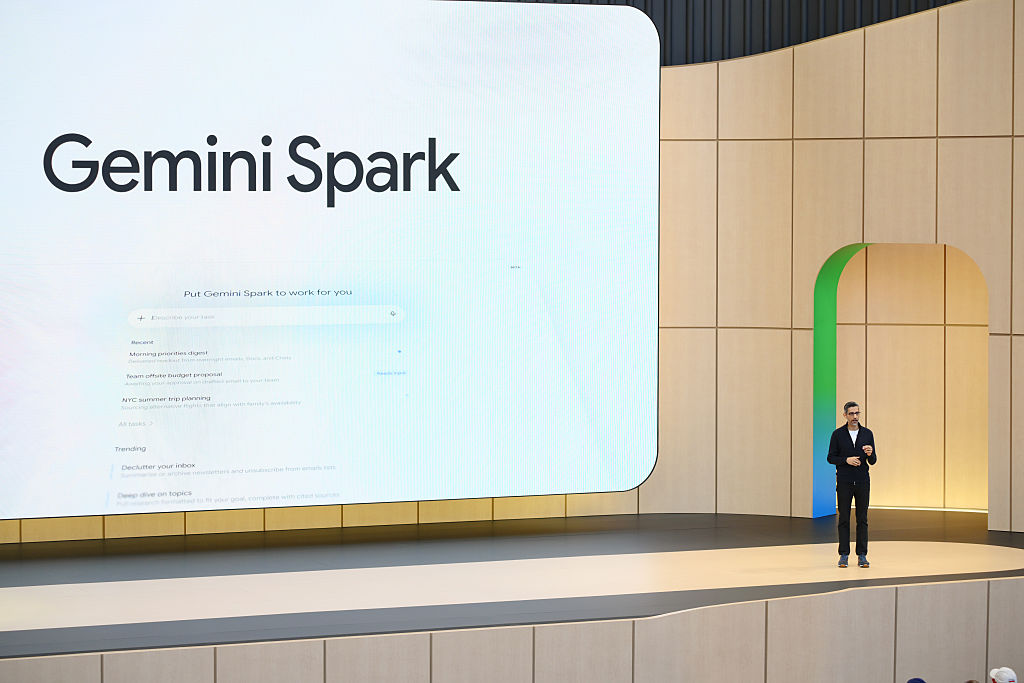
Artificial intelligence is rapidly becoming an inescapable component of our digital daily lives, integrating into personal assistants, wearable hardware, and productivity tools, but not without raising questions about cost models and privacy.
What happened
In recent days, several news items have highlighted the rapid and pervasive integration of AI into common products and services. Google launched Gemini Spark, a 24/7 AI assistant designed to automate daily tasks, from email summaries to local event planning, presented as a separate product from the main Gemini ecosystem TechCrunch AI. Concurrently, Meta is reportedly developing an AI pendant, a wearable hardware device that promises to bring artificial intelligence even closer to our person, suggesting a strong push towards ambient AI TechCrunch AI.
Enterprise productivity tools are also seeing significant evolution. Microsoft 365 Copilot received an update that improves its speed and design, offering more structured and reliable responses. The company stated that the new design loads twice as fast, enhancing the user experience on both desktop and mobile The Verge AI. However, not all innovations have been met with enthusiasm. GitHub Copilot, the AI assistant for developers, introduced new token-based billing, generating discontent among users who fear unpredictable and potentially higher costs TechCrunch AI. This scenario fits into a broader "browser war" context where alternatives to Chrome and Safari are also integrating advanced AI features to attract users TechCrunch AI, demonstrating how AI is becoming a fundamental distinguishing element at every layer of digital interaction.
Why it matters
This wave of AI integration has profound implications for individuals, professionals, and the social fabric. For the average user, the emergence of always-on assistants like Gemini Spark and wearable devices such as Meta's pendant promises unprecedented convenience, but also raises serious concerns about privacy and the constant collection of personal data. The line between helpful assistance and pervasive surveillance is becoming increasingly blurred, making transparency about data collection and usage methods crucial.
For professionals, particularly developers, the change in billing models for tools like GitHub Copilot represents a turning point. The shift to a token-based system introduces cost uncertainty, increasing the risk of unexpected expenses for heavy AI users. This not only impacts budgets but can also limit the adoption of AI technologies by small businesses or independent developers, creating new barriers to innovation and access. On the other hand, improvements in the speed and reliability of Microsoft 365 Copilot highlight AI's potential to enhance business productivity, but also the growing dependency on these solutions for daily operations. The competition among browsers, driven by AI integration, indicates that artificial intelligence is no longer an optional addition but a central element in the battle for user attention and data.
The HDAI perspective
The rapid and ubiquitous integration of AI we are witnessing demands an urgent reflection on the principles of Human Driven AI. It is not enough for AI to be powerful or convenient; it is fundamental that it is designed and implemented in a way that preserves and enhances human autonomy, privacy, and fairness. The proliferation of always-on assistants and wearable hardware requires robust AI governance, capable of clearly defining the boundaries of data collection and ensuring user control over their information. The debate on cost models, such as that of GitHub Copilot, underscores the importance of ethical AI that does not create new economic disparities or limit access to innovation due to unpredictable costs.
The vision of Human Driven AI advocates that artificial intelligence should be an amplifier of human capabilities, not a substitute or controller. This means companies must adopt transparent and responsible approaches, focusing on the impact on people. The design of AI systems must prioritize cost clarity, privacy protection, and the ability for users to understand and control how AI interacts with their lives. This approach is essential for building trust and ensuring that AI contributes positively to the AI future of work and society, central themes we will address at the HDAI Summit 2026.
What to watch
It will be crucial to monitor market and regulatory responses to these innovations. The adoption of new AI assistants and wearable devices will largely depend on companies' ability to balance innovation with user trust, especially in terms of data privacy and security. Similarly, the evolution of business models, such as token-based billing, will require careful evaluation of its impact on the developer ecosystem and competition policies. Emerging regulations, such as the EU AI Act, will play a fundamental role in shaping the future directions of this integration, ensuring that technological development proceeds ethically and sustainably.