
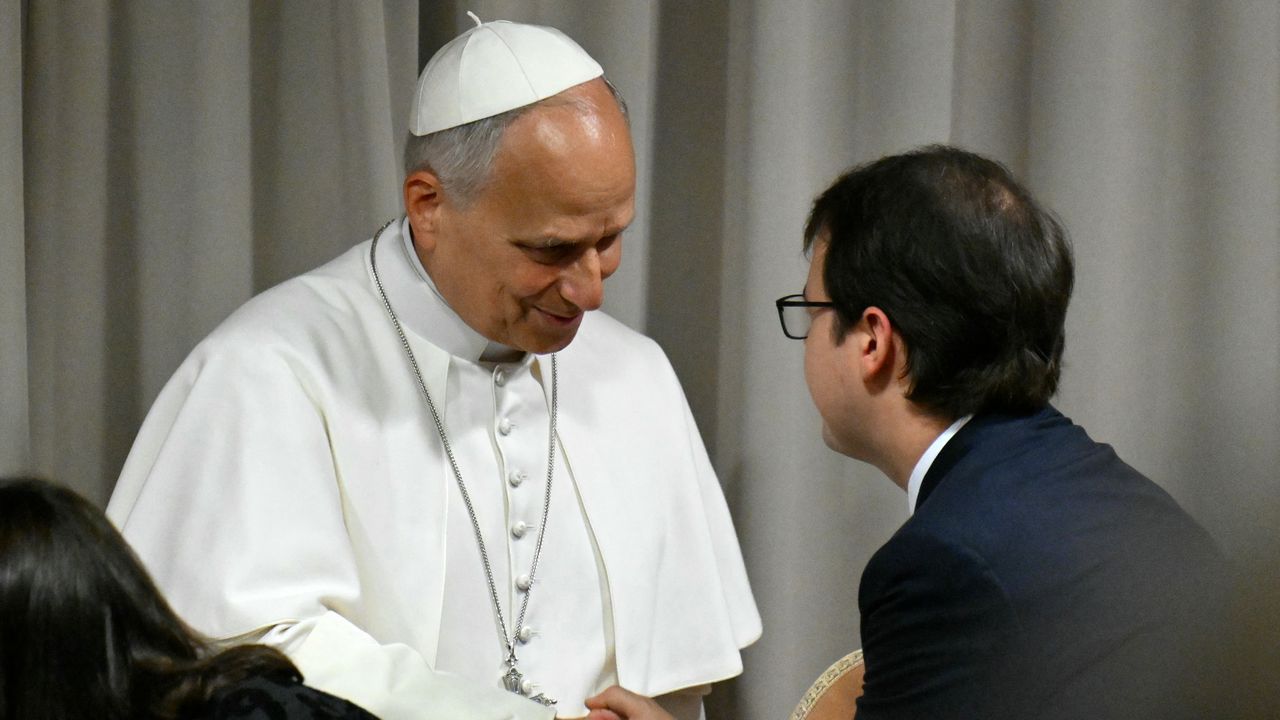
Pope Leo XIV has released his first encyclical, "Magnifica Humanitas," dedicating it to artificial intelligence and its impact on society, with a strong call to "disarm" algorithms and guide technology towards the common good. This event marks a crucial moment in the global debate on ethical AI, bringing the issue to the forefront of moral and spiritual attention, and providing the Human Driven AI movement with an institutional ally of planetary weight.
What happened
Pope Leo XIV's encyclical, titled "Magnifica Humanitas," was made public on May 25, 2026, and represents one of the most authoritative and comprehensive stances taken by the Catholic Church on artificial intelligence. The signature bears the date of May 15, which is no coincidence: it marks the 135th anniversary of Leo XIII's Rerum Novarum, an explicit signal of the intent to place the text within the lineage of social doctrine, updating it to the digital paradigm.
The papal document is not limited to a general exhortation but concretely addresses the increasing pervasiveness of AI in every aspect of our daily lives. The Pontiff analyzed how AI is redefining the world of work, automating processes and creating new professions, but also raising questions about human dignity and the need for reskilling. He then highlighted the influence of algorithms in information dissemination, warning against misinformation and polarization, and in decision-making processes, where AI can influence crucial choices in sectors such as healthcare, justice, and finance.
A central point of the encyclical is the denunciation of the concentration of technological power in the hands of a few global players. Pope Leo XIV expressed deep concern that this centralization could lead to forms of control and manipulation, undermining individual autonomy and national sovereignty. The metaphor of "disarming artificial intelligence" does not imply a rejection of technological progress but rather an urgent invitation to strip AI of its harmful potential, guiding it towards ethical and socially responsible ends. The Pope called attention to the need for robust and inclusive AI governance that places human beings at the center of AI development and use, ensuring that benefits are widely distributed and risks are mitigated wired.it. This approach resonates with the international debate on responsible AI and the need for regulatory frameworks that protect fundamental rights.
The encyclical's opening line is striking and sets the stakes: "The magnificent humanity that God has created stands today before a decisive choice: to raise a new Tower of Babel, or to build the city where God and humanity dwell together."
Why it matters
Pope Leo XIV's intervention elevates the debate on artificial intelligence from a predominantly technical, economic, or geopolitical issue to one of profound ethical, moral, and spiritual significance. The Pontiff's voice, reaching over 1.3 billion faithful worldwide, has the power to raise awareness among a vast audience, far beyond the circle of specialists and industry insiders. This means that the urgency of an ethical approach to technological development is no longer confined to academia or think tanks but becomes part of a broader reflection on the direction humanity intends to take with AI.
The critique of algorithmic power concentration resonates with growing global concerns about digital sovereignty, fair competition, and the need for a more equitable distribution of AI's benefits and risks. The encyclical suggests that AI is not just a tool but a force shaping our lives, our societies, and even our understanding of what it means to be human. Addressing these challenges requires a collective commitment that transcends national and cultural boundaries, encouraging interreligious and intercultural dialogue on the ethics of technology. "Magnifica Humanitas" invites us to consider AI not as a mere accelerator of efficiency but as a field where the future of human dignity and social justice is at stake.
The HDAI perspective
Pope Leo XIV's encyclical significantly reinforces the vision of Human Driven AI. Our mission is to promote artificial intelligence that genuinely serves humanity—a powerful and beneficial tool, not an end in itself or an uncontrolled power that threatens our fundamental values. The call to "disarm" AI should not be interpreted as an invitation to halt technological progress but rather as an exhortation to channel innovation towards principles of justice, transparency, accountability, and responsibility. It means building systems that are designed with humans at the center, that respect privacy, protect against discrimination, and promote fairness.
These are the central themes that will be explored at the HDAI Summit 2026 in Pompeii, where international experts, thought leaders, and policymakers will gather to discuss how to translate these ethical principles into concrete practices of AI governance and technological development. The Pope's call for deep reflection on the "Magnifica Humanitas" of the digital age is a catalyst for joint action. It is crucial that technology responds to human values and is not left to the mere discretion of the market or a few tech giants, but is guided by a global ethical consensus that prioritizes the dignity of every person. Italy, with its rich humanistic tradition and commitment to innovation, can play a key role in this debate, as demonstrated by the international media attention for the Pompeii event — a venue chosen with symbolic intent: the city that time has preserved becomes the place where we discuss how to preserve the human in the age of AI.
What to watch
It will be crucial to observe how supranational institutions, national governments, and large technology companies respond to this high-profile moral appeal. The encyclical could stimulate new legislative initiatives, accelerate the adoption of global ethical standards for AI, and encourage greater investment in the research and development of responsible AI solutions. The hope is that "Magnifica Humanitas" can serve as a foundation for a broader and more inclusive dialogue, leading to closer collaboration among ethicists, technologists, policymakers, and civil society to shape a digital future that is truly human-centric.