AI Agents: Collaboration, Verification, and the Rise of Collective Intelligence
The artificial intelligence landscape is witnessing a rapid evolution of AI agents, which are transforming from autonomous tools into increasingly collaborative and interconnected entities, capable of interacting with each other and with humans in complex ways.
What happened
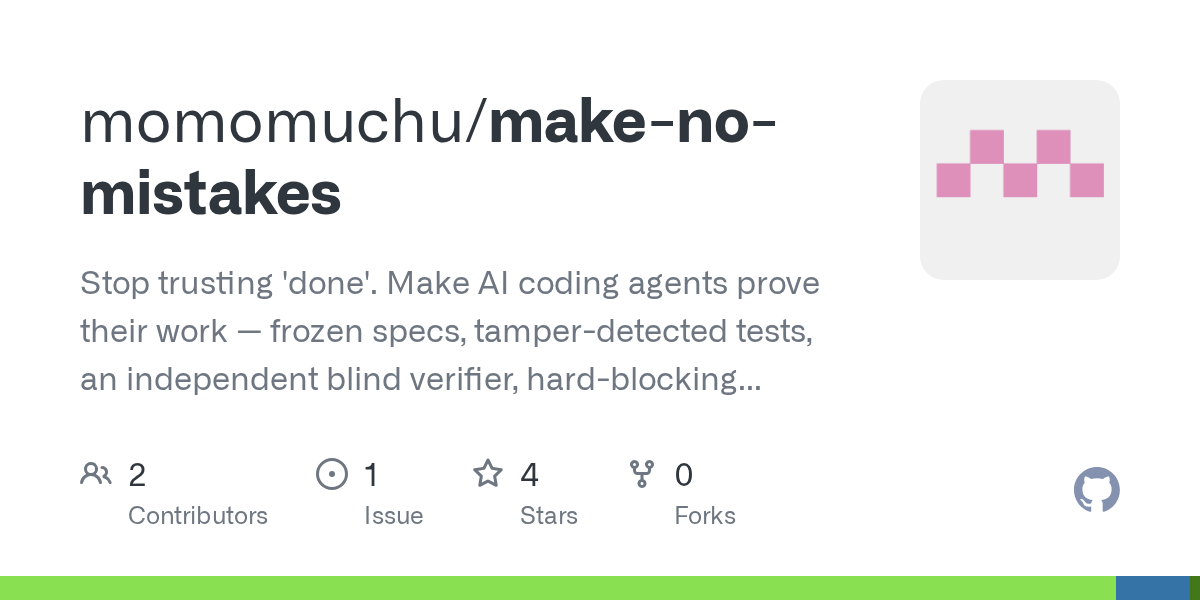
Recently, several initiatives have highlighted this trend. For example, the celebrations for America's 250th anniversary became a testing ground for AI-powered collective intelligence, demonstrating how agents can coordinate to manage complex events and decision-making processes America's 250th became a test of AI-powered Collective Intelligence. In parallel, the need to ensure the reliability of the work performed by agents has emerged. The "Make No Mistakes" project proposes that AI coding agents must prove the correctness of their work, introducing an intrinsic verification principle.
This drive towards interoperability and verification is also evident in the ability to expose AI agents as MCP (Multi-Agent Communication Protocol) servers for platforms like ChatGPT, Claude, and Cursor, facilitating their integration into broader ecosystems Turn Your AI Agent into an MCP Server for ChatGPT, Claude and Cursor. Furthermore, specific tools for agent management have emerged, such as Schedpilot, which offers social media management functionalities for AI agents, suggesting a future where these entities will have an active and managed digital presence Social media management for AI Agents. A concrete example of human-AI and AI-AI collaboration is ProofTree, a platform that allows users to do math with a context-aware AI, also connecting to forums of live human mathematicians for discussions and verifications, combining AI efficiency with human expertise Show HN: Social and context-aware AI platform to do math.
Why it matters
The evolution of AI agents towards collaborative and verifiable models has profound implications for work and society. The ability of agents to coordinate and interact in more sophisticated ways can lead to a significant increase in efficiency in sectors such as project management, scientific research, and software development. However, this increased autonomy and interconnectedness raise crucial questions about responsibility and transparency. If an AI agent makes a mistake or produces an unethical outcome, who is accountable? The demand for coding agents to "prove their work" is a clear signal of the growing need for auditability and accountability mechanisms.
Moreover, the integration of AI agents into social and collaborative platforms, as demonstrated by ProofTree or Schedpilot, redefines the nature of human-machine interaction. It's no longer just about giving commands, but about collaborating with entities that can learn from context, participate in discussions, and even manage their own digital "presence." This opens new frontiers for global and Italian AI innovation, but also requires careful consideration of how to maintain human control and ensure that AI always acts in the best interest of people. AI governance thus becomes a central theme for balancing innovation and safety.
The HDAI perspective
The vision of Human Driven AI is intrinsically linked to these developments. The emergence of collaborative AI agents and the growing emphasis on verification and accountability are fundamental steps towards artificial intelligence that is not only powerful but also reliable and aligned with human values. It is imperative that, as AI agents become more autonomous and interconnected, robust ethical and governance frameworks are developed and implemented. This includes clearly defining responsibilities, creating transparent audit mechanisms, and promoting a design that centers human interaction and oversight. Topics like these will be at the heart of discussions at the HDAI Summit 2026, where experts from around the world will discuss how to guide AI towards a future that benefits all of society, keeping humans at the center of the decision-making and control process.
What to watch
In the coming months, it will be crucial to observe how companies and developers respond to the growing demand for transparency and verifiability of AI agents. The adoption of open standards for communication between agents (such as MCP protocols) and the integration of proof-of-work systems will be key indicators of the sector's maturity. It will also be interesting to see the evolution of collaborative platforms that integrate AI and human interaction, and how these will influence productivity and creativity in various professional fields.