
AI's Environmental Impact and New Frontiers: The Transparency Challenge
Artificial intelligence continues to astound with unprecedented computational and problem-solving capabilities, yet it simultaneously raises urgent questions about its environmental impact and the need for greater transparency. This duality is clearly evident in recent news, with environmental activist Erin Brockovich shining a spotlight on the secrecy surrounding data centers, while AI solves complex mathematical enigmas, outlining a future where innovation must be intrinsically linked to responsibility—a core principle for Human Driven AI.
What happened
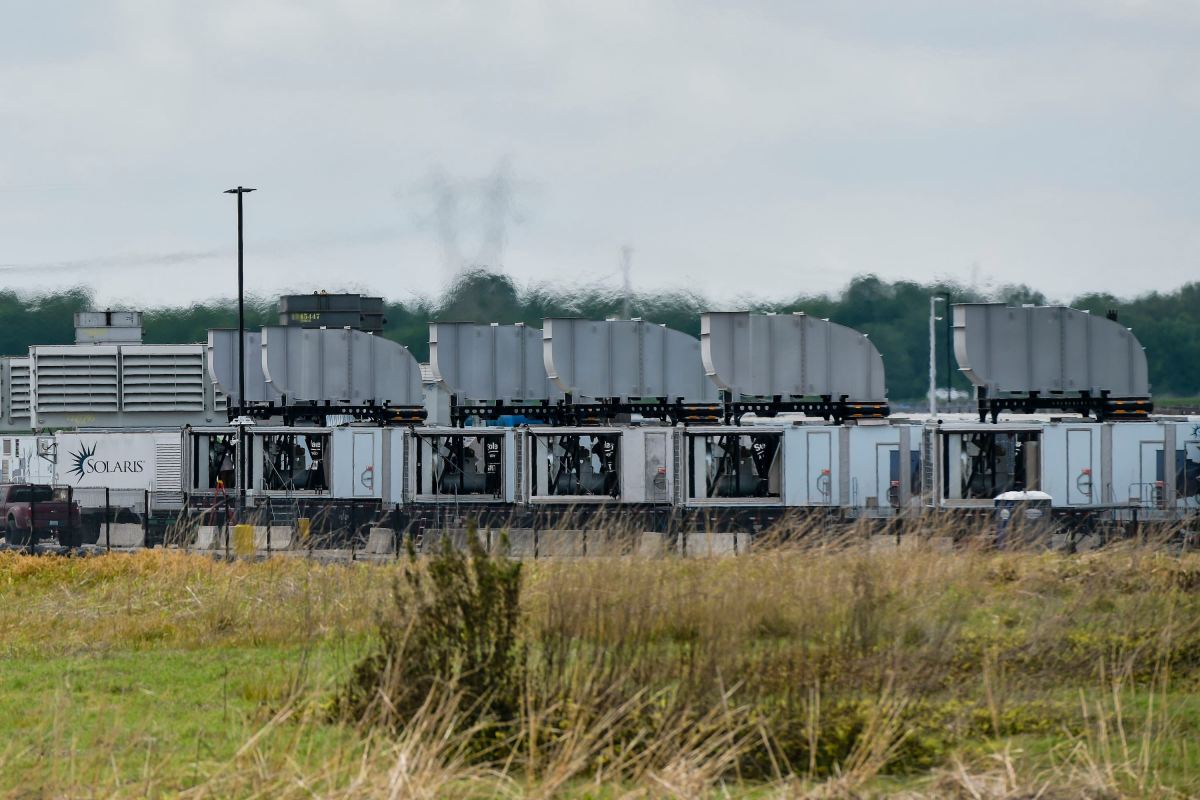
Environmental activist Erin Brockovich has recently embarked on a new mission, denouncing the lack of transparency around the data centers that power artificial intelligence. Brockovich highlighted how these infrastructures, essential for AI's operation, consume enormous amounts of energy and water, often operating in secrecy and failing to provide adequate information to local communities about their environmental impact TechCrunch AI. Her initiative aims to promote greater accountability and clarity from technology companies.
Concurrently, AI has demonstrated extraordinary capabilities in scientific research. An OpenAI model solved a long-standing Erdős problem, a result that has excited the global mathematical community. This discovery, reported by the Wall Street Journal, underscores the transformative potential of artificial intelligence in pushing the boundaries of human knowledge.
In this context of rapid advancement, technology analyst Benedict Evans compared AI's impact to that of the internet or mobile telephony, suggesting a profound yet not unprecedented transformation Hacker News AI filtered - Benedict Evans. This perspective encourages a balanced reflection on the future, free from sensationalism, but aware of the scale of change.
Finally, the debate around open-source AI continues to be central. A commentary in Reuters Breakingviews highlighted how the rise of open-source models is putting pressure on tech giants developing proprietary solutions, opening new challenges and opportunities in terms of accessibility, security, and innovation.
Why it matters
The increasing demand for AI infrastructure, particularly data centers, leads to massive energy and water consumption. The lack of transparency regarding these impacts not only raises environmental concerns but also erodes trust within local communities, which often bear the consequences without being adequately informed or involved. This scenario highlights a gap in AI governance and corporate social responsibility that requires urgent attention.
AI's extraordinary capabilities, such as solving complex mathematical problems, promise significant advancements in many sectors, from medicine to material science. However, such rapid progress must be balanced by a clear understanding of its ethical and social implications. The ability to solve complex problems does not exempt AI and its developers from the need to operate responsibly and sustainably.
The comparison between proprietary and open-source models is, finally, crucial for the future of innovation. While open source can democratize access to AI and accelerate research, it also poses challenges in terms of security, control, and standardization, further complicating the definition of an effective regulatory framework.
The HDAI perspective
Erin Brockovich's intervention serves as a fundamental warning for the entire AI ecosystem. For Human Driven AI, artificial intelligence cannot be considered merely a set of abstract algorithms; it is deeply rooted in physical infrastructures that have a tangible impact on the environment and people's lives. The demand for transparency regarding data centers is not just an ecological issue but a call for the social responsibility that the industry must assume to ensure equitable and sustainable development.
This is not a technical problem; it is an ethical and governance problem. Technological innovation, however brilliant, must proceed hand-in-hand with an awareness of its repercussions. It is imperative that the benefits of AI are distributed equitably and that risks, including environmental ones, are mitigated through open dialogue with communities and a robust regulatory framework. This theme of sustainability and transparency in AI infrastructure will be central to the discussions at the HDAI Summit 2026.
What to watch
It will be crucial to observe how technology companies and regulatory authorities respond to increasing pressures for greater transparency and sustainability in data centers. The evolution of the open-source landscape and future AI mathematical discoveries will continue to indicate the direction of technological progress, but the real challenge will remain the ethical and responsible integration of AI into society, ensuring that its development aligns with human values and the protection of our planet.