AI in Kids' Toys, Labor, and Future Visions: The Need for Ethical Governance
The advancement of artificial intelligence is presenting a range of ethical and social challenges across diverse domains, from children's toys to the future of work, and even extreme philosophical visions on humanity's role. The need for robust AI governance and a human-centric approach is increasingly evident.
What happened
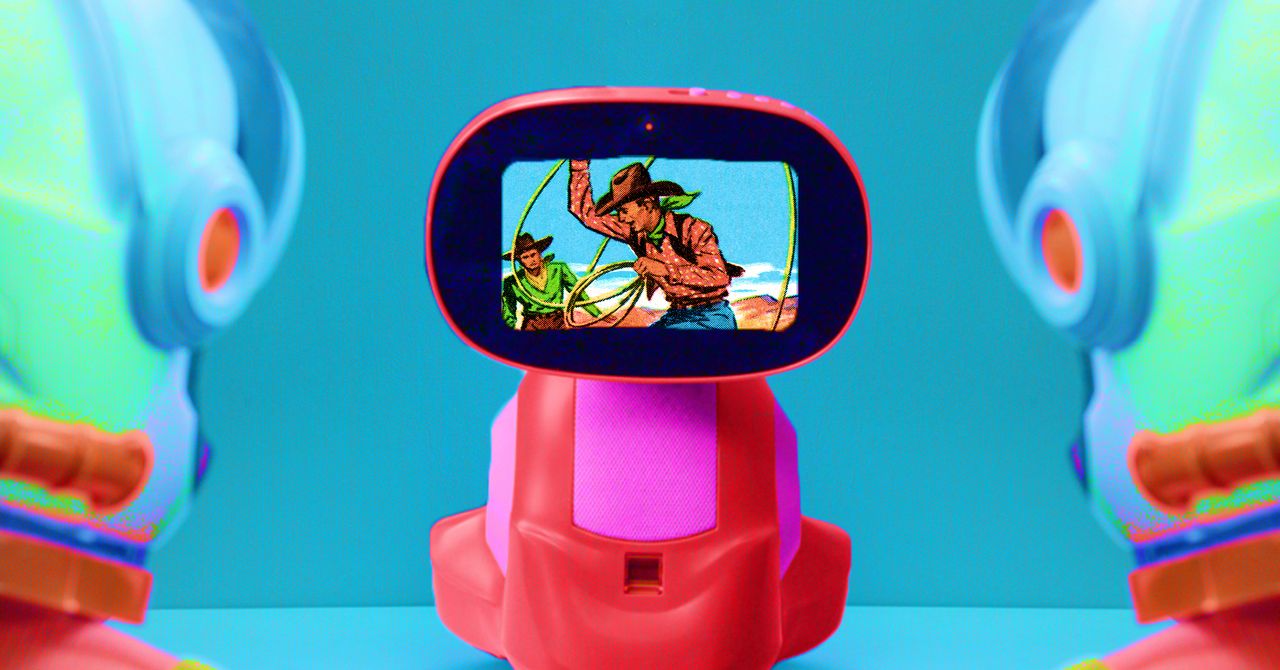
Recent reports highlight how AI is infiltrating unexpected sectors, raising crucial questions. A striking example is the emergence of connected AI toys, described by Wired AI as a "new wild west." These interactive companions, while promising to revolutionize play and learning, pose serious concerns regarding children's data privacy and the potential manipulation of child development. Some lawmakers have already voiced concerns, even proposing a ban.
In parallel, philosopher Nick Bostrom has reignited the debate on humanity's long-term future in an AI-dominated world. His vision of a "big retirement" for humanity, where advanced AI would solve all the world's problems, as reported by Wired AI, suggests a future where humans might no longer have a productive role, raising profound questions about the meaning of existence and personal fulfillment.
On the economic and social front, AI's impact on the labor market is a growing concern. In California, gubernatorial candidate Tom Steyer has proposed a jobs guarantee for workers who might be displaced by artificial intelligence, as documented by Wired AI. This proposal, although considered a long shot, underscores the urgency of addressing the consequences of automation and professional retraining. Adding to this are growing security concerns: even seemingly innocuous devices like robot lawnmowers can be hacked, as highlighted by Wired AI, revealing vulnerabilities that could have far more serious implications in critical contexts.
Why it matters
These developments are not anecdotal; they represent the central challenges our society must confront in the AI era. For children, exposure to AI toys without adequate safeguards can compromise their privacy, influence cognitive and emotional development, and create dependencies. The massive data collection by these devices raises fundamental ethical questions about who controls such information and how it is used.
For the world of work, AI-driven automation threatens to redefine entire sectors, making some professions obsolete while creating new ones. Without active policies for retraining, continuous education, and social safety nets, the risk is an increase in inequality and structural unemployment. The Californian proposal, despite its ambition, highlights the need to think about innovative solutions for an equitable AI future of work.
Finally, visions of an AI-"solved" future, while fascinating, compel us to reflect on the value of human labor, creativity, and serendipity. If AI were to take on every task, what would be humanity's role? This debate is not merely philosophical but has practical implications for how we design AI systems and what social objectives we want them to pursue. Security, moreover, is the foundation of any technological adoption: a connected device, if vulnerable, can transform from a convenience into a threat, with potential cascading effects on infrastructure and personal data.
The HDAI perspective
For Human Driven AI, these news reinforce the conviction that technological innovation must always be guided by principles of ethical AI and responsibility. We cannot allow AI advancement to occur in a regulatory "wild west," especially when it comes to impacting future generations or the dignity of labor. Our perspective is clear: AI must serve humanity, not replace it or compromise its well-being. This means designing systems that respect privacy, promote human autonomy, and are transparent and secure. Governance is not a brake on innovation but its foundation for a sustainable and just future. Topics such as the protection of children's data, professional retraining, and the definition of an ethical framework for AI will be central to discussions at the upcoming HDAI Summit 2026 in Pompeii, where experts and stakeholders will converge to outline concrete paths.
What to watch
It will be crucial to monitor the evolution of international regulations, such as the EU AI Act, and local legislative initiatives aimed at regulating the use of AI in consumer products and the workplace. The industry will need to respond with greater transparency and integration of ethical principles from the design phase. Research on the AI future of work and alternative economic models will be critical to anticipate and mitigate social impacts.