
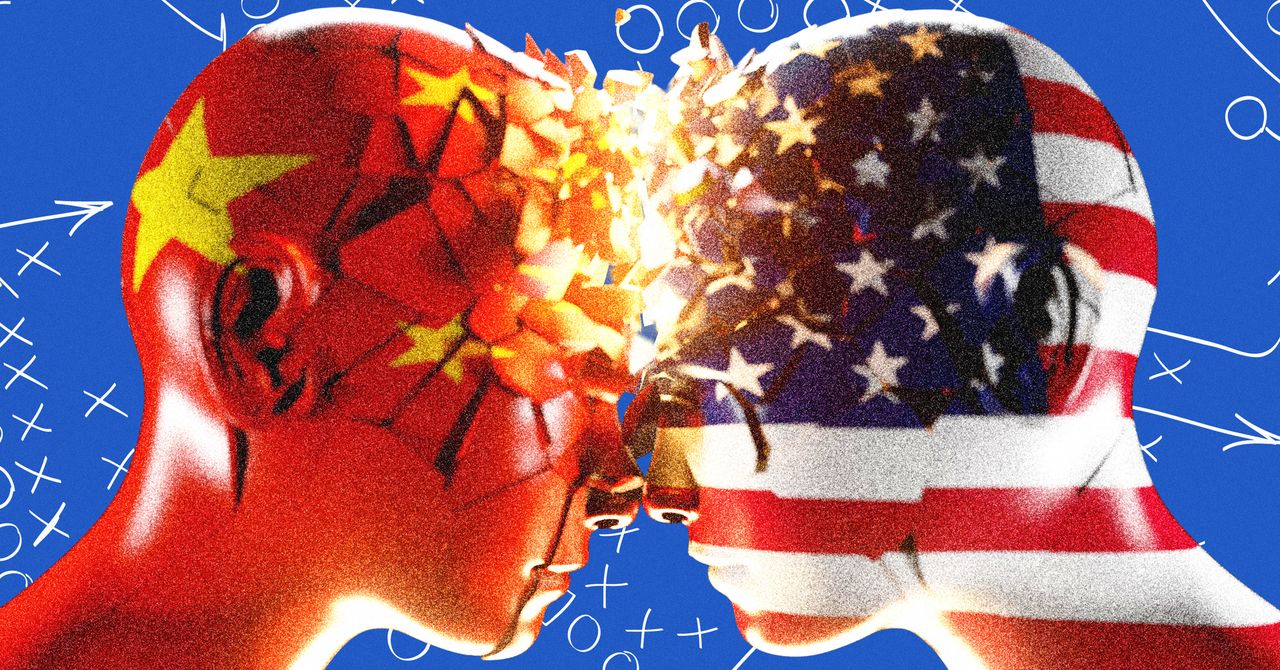
The world of artificial intelligence is experiencing a phase of rapid evolution and intense competition, with profound implications spanning from geopolitics to the environment, from labor to entertainment.
What happened
China is emerging as a key player in the AI landscape, challenging Silicon Valley's dominance with its open-source AI models. As access to frontier models from companies like Anthropic and OpenAI becomes more restricted, Chinese labs are pitching open, stable, and increasingly capable alternatives, as highlighted by China’s Open AI Models Are Challenging Silicon Valley’s Playbook. This dynamic has sparked a debate within the US administration, which is trying to define a strategy for handling the rise of these powerful Chinese AI models The White House Is Trying to Figure Out What to Do About Chinese AI.
In parallel, the exponential growth of AI raises significant concerns regarding energy consumption. Data centers are projected to use four times more electricity by 2035, with new centers built through 2033 potentially consuming as much electricity as all of India uses today Data centers expected to use 4x more electricity by 2035. This environmental impact adds to the transformation AI is bringing to sectors like entertainment, where streaming platforms are evolving into "universal entertainment apps," blurring distinctions between music, video, and podcasts thanks to AI's ability to create and recommend content AI and the rise of the universal entertainment app.
The world of work is also affected by these innovations. Jack Dorsey, co-founder of Twitter, has launched Buzz, a group chat platform that integrates AI agents into team conversations, positioning itself as a competitor to Slack Jack Dorsey is taking on Slack with Buzz, a group chat platform for teams and their AI agents. This indicates a clear trend towards hybrid collaborative tools where AI is not just an assistant but an active participant.
Why it matters
The competition between open and proprietary AI models is not merely a technological issue but a crucial geopolitical front that will determine who holds control and influence over the future development of artificial intelligence. The choice between openness and restriction has direct implications for security, innovation, and global access to these technologies. The increasing energy demand from data centers, on the other hand, presents an unavoidable environmental urgency. If not managed with sustainable solutions, AI's growth could exacerbate the climate crisis, making a reflection on efficiency and renewable energy sources imperative.
At a societal level, AI is redefining cultural consumption paradigms and work dynamics. The merging of entertainment formats makes the user experience more fluid but raises questions about content diversity and the role of human creators. In the workplace, the integration of AI agents into teams promises greater efficiency but requires a recalibration of human skills and a new etiquette for human-machine collaboration, with potential impacts on privacy and decision-making responsibility.
The HDAI perspective
These diverse developments underscore the urgent need for an AI governance approach that is forward-thinking and human-centered. The philosophy of Human Driven AI compels us to consider not only technological innovation but also its ethical, social, and environmental ramifications. The proliferation of AI models, whether open or proprietary, demands rigorous standards of transparency and accountability. It is crucial that the AI race does not sacrifice planetary sustainability and human well-being in the name of progress. We must ensure that AI is a tool for human advancement and not a source of new inequalities or systemic risks. Topics such as energy impact, the ethics of open models, and human-AI collaboration in the workplace will be central to discussions at the HDAI Summit 2026.
What to watch
It will be crucial to observe how government policies, particularly those in the US and Europe, adapt to regulate Chinese AI and open-source models, balancing national security and innovation. Concurrently, the industry must address the energy challenge, investing in more efficient cooling solutions and clean energy sources for data centers. Finally, the evolution of entertainment platforms and AI-integrated collaboration tools will continue to shape our daily and professional lives, requiring constant monitoring of their long-term impacts.