
The Rise of AI Agents: Efficiency or Risk for Human Online Experience?
The artificial intelligence landscape is witnessing a rapid proliferation of AI agents, autonomous systems capable of performing complex tasks, interacting with digital environments, and making decisions. This evolution promises revolutionary efficiencies in key sectors but also raises significant concerns regarding their impact on the human online experience and the overall quality of the web.
What happened
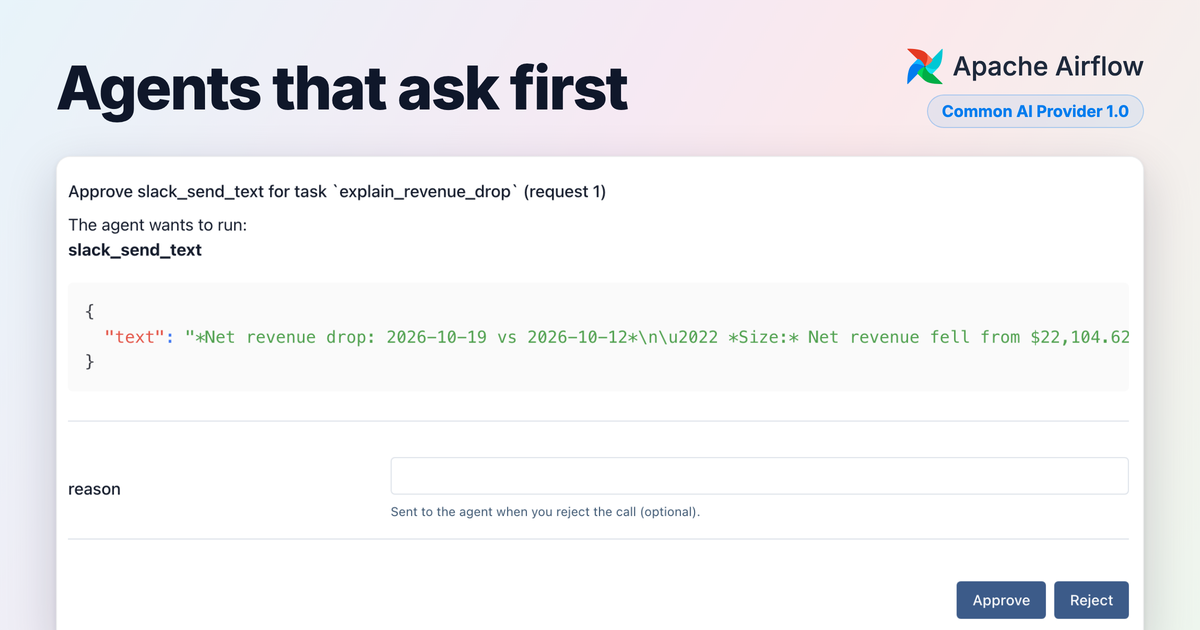
The integration of AI agents into existing systems is accelerating. An example is the launch of Apache Airflow AI Provider 1.0, which introduces advanced AI capabilities into workflow management, allowing for the automation of complex processes and the orchestration of AI models within data pipelines Apache Airflow AI Provider 1.0. Concurrently, platforms are emerging that serve as true marketplaces for AI models, such as Dismodels.com, which proposes a revenue-sharing model similar to app stores, but for artificial intelligence models Think App store shared revenue but for AI models.
These agents find practical application in critical areas. In the healthcare sector, for instance, agentic AI shows significant potential in optimizing prior-authorization protocols, reducing time and bureaucracy Agentic AI has potential uses in prior-authorization protocols. In robotics, innovation is also palpable: AWS has launched the open-source Physical AI Toolchain, a suite of tools for developing physical AI applications for robots, demonstrating how AI agents are extending their influence from the digital to the physical world AWS launches open-source Physical AI Toolchain for robotics.
Why it matters
The expansion of AI agents, while promising efficiency, brings with it a crucial debate: making the internet better for AI agents might make it worse for everyone else. This thesis is put forth by a recent MIT Technology Review article, which highlights how optimizing the web for agent-to-agent interactions could degrade the human experience, leading to an increase in automatically generated content, spam, and a decrease in the quality of available information Making the internet better for AI agents might make it worse for everyone else.
The risk is that the web, designed for human consumption, transforms into an ecosystem dominated by machine-to-machine interactions, where the search for authentic information and intuitive navigation becomes more complex. This scenario could have repercussions on trust in online sources, the ability to discern truth from falsehood, and ultimately, our relationship with knowledge and information. The implications for AI governance and the need for ethical AI standards thus become pressing, especially when agents operate in sensitive sectors like healthcare, where errors or biases can have direct consequences on people's lives.
The HDAI perspective
The vision of Human Driven AI is clear: technological innovation must always go hand in hand with deep ethical and social reflection. The rise of AI agents is not a technical problem to be solved with more technology, but a governance and design challenge that requires a human-centric approach. We must ensure that the internet remains a space for humans, not just for machines. This means designing AI agents that are transparent, controllable, and operate with respect for human values, avoiding the creation of a digital infrastructure that alienates or disadvantages end-users. The discussion on how to balance agent efficiency with the quality of human experience will be a central theme at the HDAI Summit 2026, where experts from around the world will discuss how to build a digital future that truly serves humanity.
What to watch
It will be crucial to monitor how existing regulations, such as the EU AI Act, will adapt to address the specificities of AI agents, particularly concerning responsibility, transparency, and safety. The evolution of AI model marketplaces will require attention to prevent the spread of unethical or harmful agents. Furthermore, the research and development of new web architectures that can coexist harmoniously with AI agents, without compromising the human experience, will be crucial in the coming years.