
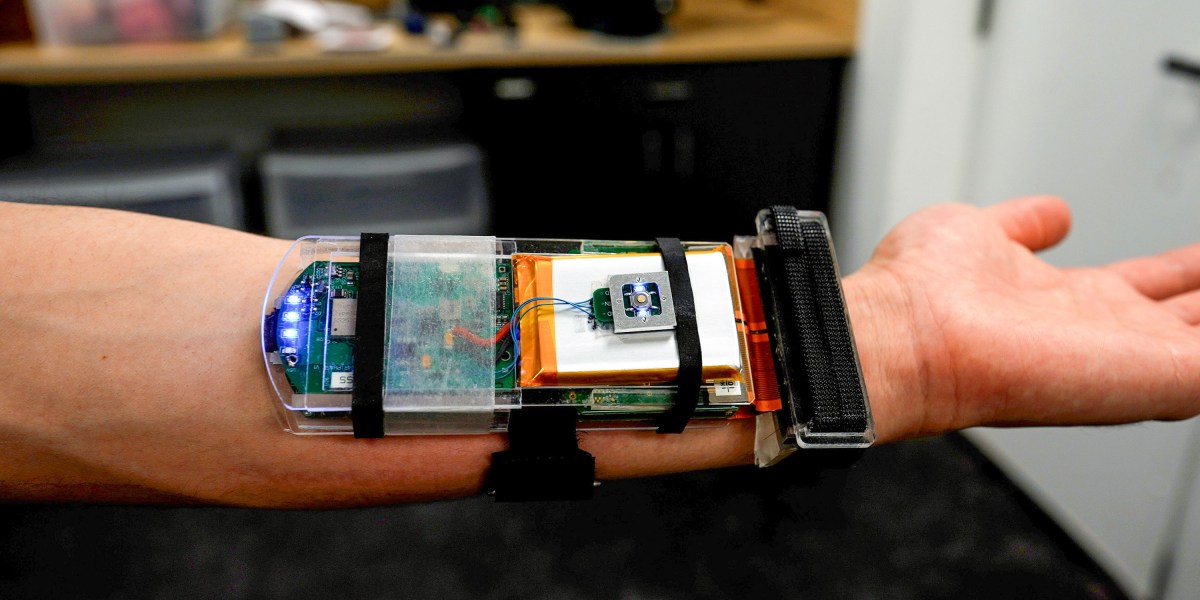
A recent innovation in robotics has enabled robotic hands to achieve unprecedented dexterity, approaching the complexity of human movement through the use of ultrasound imaging. This breakthrough, reported by MIT Technology Review, promises to transform the interaction between robots and their environment, with direct implications for the world of work and society.
What happened
Researchers have developed a system that uses ultrasound imaging to monitor in real-time the complex movements within the human hand, capturing precise data on how muscles, tendons, and joints work together to perform delicate tasks. Traditionally, replicating human dexterity in robotic hands has been an enormous challenge due to the difficulty of understanding and reproducing the 34 muscles, 27 joints, and over 100 tendons and ligaments that coordinate our hand movements. The new approach overcomes this hurdle by providing robots with an internal "view" of human movement, allowing them to learn and mimic complex gestures with unprecedented precision. The project, named Project Ulna, has demonstrated that robots can now replicate actions requiring fine manipulation, such as picking up fragile objects or performing tasks that demand great tactile sensitivity, surpassing the limitations of previous systems based solely on external vision or superficial force sensors.
Why it matters
This ability to replicate human dexterity has a profound impact on various sectors. In manufacturing, robots could perform more complex and precise assemblies, reducing the need for human intervention in repetitive or dangerous tasks. In the medical field, more agile robotic hands could assist surgeons or improve rehabilitation. However, the advancement of robotic dexterity also raises questions about job automation. If robots can replicate complex manual tasks, what new challenges will the human workforce face? It is crucial to prepare society for a future where human-machine collaboration will be increasingly sophisticated, requiring new skills and continuous reskilling. A robot's ability to mimic human touch and manipulation could also change the perception of artificial intelligence, making it more tangible and present in daily life.
The HDAI perspective
Innovation in robotic dexterity is a prime example of how artificial intelligence is redefining the boundaries of what's possible. However, for Human Driven AI, technological progress must always be accompanied by deep ethical and social reflection. A robot's ability to replicate complex human movements is not just an engineering issue, but one of governance and impact on people's lives. We must ensure that these technologies are developed and implemented responsibly, with the goal of enhancing human well-being, not indiscriminately replacing it. The challenge is not to halt innovation, but to guide it to serve humanity, promoting an ethical AI approach that places ethics at its core. This means investing in training for new generations and in reskilling programs for those at risk of marginalization, ensuring that the benefits of AI are distributed equitably.
What to watch
Next steps will include integrating these systems into real-world application contexts and further refining the robots' learning capabilities. It will be crucial to observe how regulations, particularly European ones like the EU AI Act, adapt to these new robotic capabilities, especially concerning safety and accountability. Research will continue to explore the interaction between artificial intelligence and robotics to create increasingly autonomous and capable systems, but it will be our ability to govern these developments that determines their true value for society.