Artificial intelligence is making significant strides in automating software development, with new tools enabling AI agents to generate code, user interfaces, and even publish iOS applications without the need for physical Mac hardware.
What happened
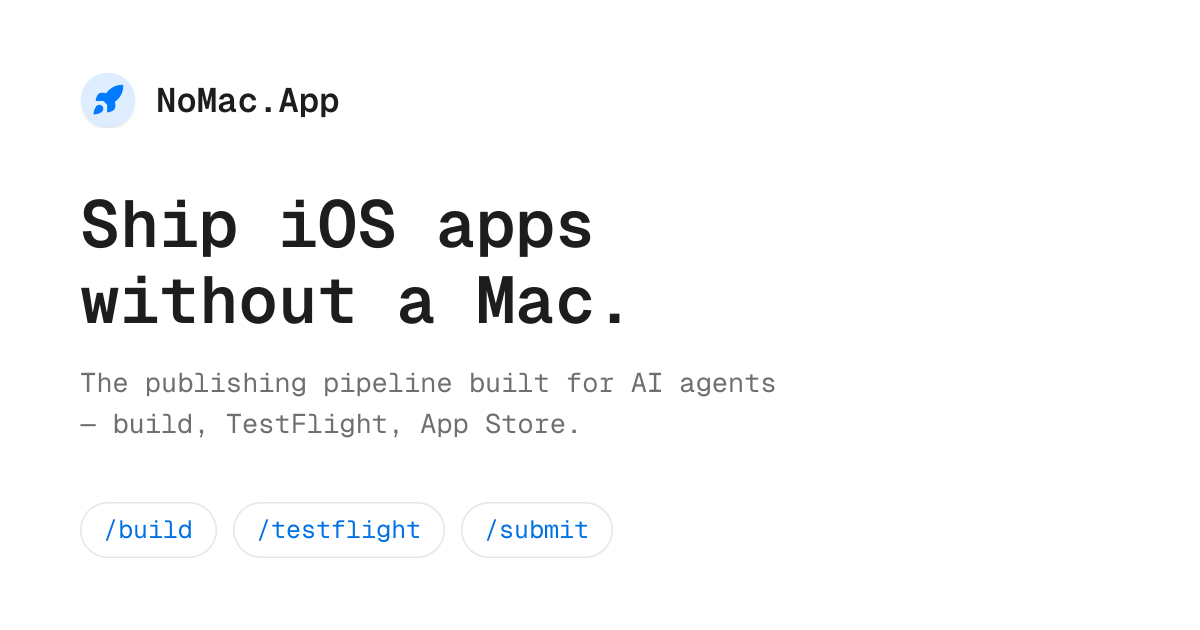
Several recent initiatives highlight this trend. The NoMac project aims to allow AI agents to develop and deploy iOS applications without requiring a physical Apple computer, potentially democratizing access to this development ecosystem nomac.app. In parallel, GenUI demonstrates how AI agents can generate native, interactive SwiftUI interfaces for iOS and macOS, moving beyond mere text output to create functional UI components github.com/kiliczsh/genui. These advancements are part of a broader context of tools that enhance programmer productivity, such as AI integration into code editors like Neovim, which offers intelligent assistance during coding github.com/s2xon/aeovim. Code analysis and cyber defense also benefit from AI, with growing interest in the role of compilers and artificial intelligence in software security steveklabnik.com/writing/compilers-and-ai-cyber-defense.
Why it matters
These developments are not just incremental improvements; they represent a potential paradigm shift in software development. The ability to create and deploy iOS apps without a physical Mac breaks down a significant economic and logistical barrier, opening doors for developers and small businesses in regions where Apple hardware is less accessible. This could accelerate innovation and diversify app offerings. For industry professionals, the focus shifts from merely writing code to supervising, architecting, and validating AI-generated work. Developers will increasingly become “orchestrators” of intelligent agents rather than executors of repetitive tasks. The quality, security, and ethics of AI-generated code become critical aspects, demanding new skills and audit methodologies. Automating interface generation, in particular, promises to significantly speed up prototyping and development cycles, freeing up time for creativity and complex problem-solving.
The HDAI perspective
The advancement of AI agents in software development, while promising efficiency and accessibility, raises fundamental questions for a Human Driven AI vision. It is imperative that development automation does not sacrifice quality, security, and fairness. We must ensure that AI tools do not perpetuate existing biases in training data, especially in UI generation, which could affect accessibility or user experience for certain groups. The legal and ethical responsibility for AI-generated code remains a crucial point: who is accountable if an AI-generated app has a critical bug or a security vulnerability? Our perspective is clear: artificial intelligence must be a tool to amplify human capabilities, not to replace critical thinking and ethical responsibility. This means investing in training developers to interact effectively with AI agents, developing governance standards for automatically generated software, and fostering a culture of continuous auditing. Topics like these will be central to discussions at the HDAI Summit 2026, where we will explore how Italian AI innovation and beyond can be guided by ethical and human-centric principles.
What to watch
In the coming years, we will see greater integration of AI agents across the entire software development lifecycle, from conception to maintenance. It will be crucial to monitor how development platforms, such as Apple, respond to these tools that bypass traditional hardware requirements. We also anticipate an evolution in AI governance regulations to address challenges related to intellectual property, security, and accountability of autonomously generated software. The ability of these agents to handle complex projects and adapt to changing requirements will determine their widespread adoption.