
AI Expands: Health, Security, and Creativity at the Core of Innovation
The past week has seen a significant acceleration in the integration of artificial intelligence into key sectors, from personalized health to cybersecurity and content creation, outlining a future increasingly interconnected with algorithmic capabilities.
What happened
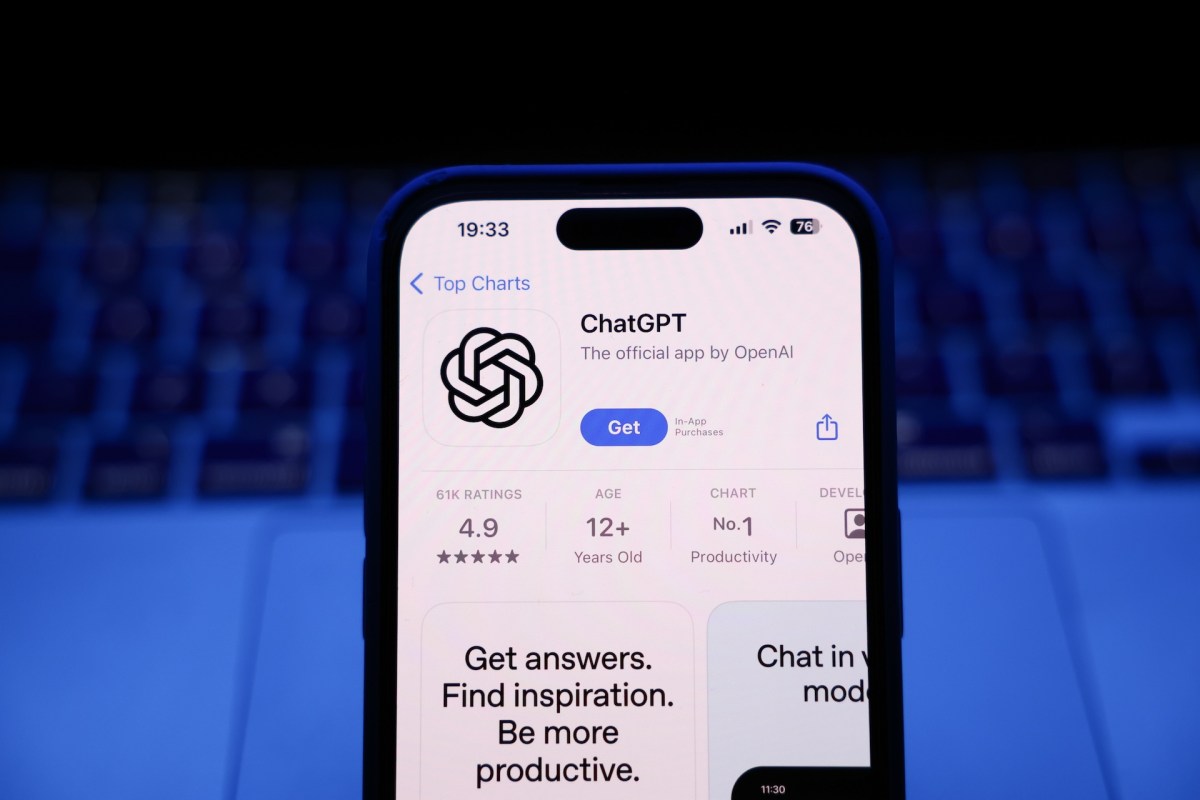
OpenAI has made ChatGPT Health available to all U.S. users, allowing integration with personal data from services like Apple Health TechCrunch AI. This step marks an expansion of AI into an extremely sensitive area, offering tools for personal well-being management while raising important questions about data privacy.
On the security front, AegisAI, a startup founded by former Google security executives, secured $36 million in funding to combat AI-driven spear phishing. Their technology uses AI agents to analyze messages much like a human would, detecting subtle anomalies that traditional checks would miss TechCrunch AI. This highlights a growing "arms race" in AI, where AI itself is deployed to counter AI-generated threats.
Anthropic Claude has updated its voice mode, making it more capable of handling complex tasks such as rescheduling meetings or drafting emails TechCrunch AI. This enhancement further pushes the boundaries of conversational AI, making it an increasingly versatile tool for personal and professional productivity. In the field of generative media, Runway launched an AI model router, a tool that automatically selects the best image, video, or audio generation model based on priorities like quality, speed, or cost TechCrunch AI. This innovation simplifies access to and utilization of generative AI capabilities for developers and creatives. Finally, AMD challenged rival Nvidia with the launch of its Helios AI rack-scale system, which will begin shipping to customers later this year TechCrunch AI. This development underscores the continuous and intense competition in the hardware infrastructure required to power AI's expansion.
Why it matters
The expansion of AI into personalized health, as demonstrated by ChatGPT Health, opens promising avenues for individual well-being but simultaneously accentuates the need for robust AI governance over sensitive data. Managing medical information requires extremely stringent security and privacy protocols to prevent misuse or breaches. The risk of algorithmic bias in diagnosis or advice is another central ethical concern.
The battle against AI-driven phishing, with solutions like AegisAI, reveals the double-edged nature of artificial intelligence. While AI can be a powerful defense tool, its capabilities can also be exploited to create increasingly sophisticated threats. This triggers a digital arms race where the capacity for ethical and responsible innovation becomes crucial for global security.
The advancement of conversational assistants like Anthropic Claude and generative media tools such as the Runway AI model router is redefining the AI future of work and creative processes. Automating repetitive tasks and democratizing content creation can free up time for higher-value activities, but also necessitate reflection on professional reskilling and employment impact. The ability to select the most efficient AI model for a given task, as offered by Runway, accelerates AI in business adoption, making these technologies more accessible and performant. The hardware competition between giants like AMD and Nvidia is an indicator of the growing demand for computing power. This is not just a technical matter; it's the foundation for every AI advancement, influencing costs, accessibility, and research capabilities, and thus the pace at which AI will transform society.
The HDAI perspective
These recent developments underscore a fundamental point for Human Driven AI: AI is not a neutral force, but a powerful tool whose impact depends entirely on how it is designed, implemented, and governed. Rapid adoption in sensitive sectors like health and security makes the discussion about ethical AI no longer an option, but an urgent necessity. It is imperative that technological innovation is always accompanied by a robust governance framework and a deep reflection on human values. This approach is at the core of our mission and will be a key theme at the HDAI Summit 2026.
We must ask ourselves: who truly benefits from these innovations? What are the risks for the most vulnerable? How can we ensure that AI serves humanity, improving life without compromising privacy, security, or equity? The challenge is not just technological, but profoundly human and societal.
What to watch
It will be crucial to monitor how existing and future regulations, such as the EU AI Act, will adapt to these new applications, especially concerning health data management and cybersecurity. The interaction between rapid innovation and regulation will be decisive in shaping an AI future that is not only advanced but also responsible and human-centric.