
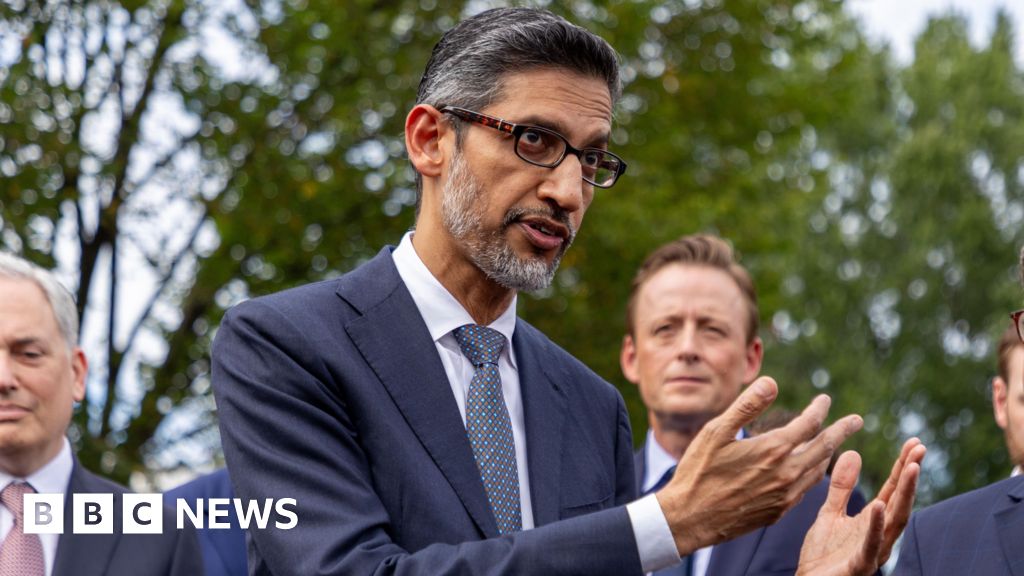
On October 29, 2026, Google saw its market value plunge by $500 billion in a single trading session, according to a BBC report. A financial earthquake that marks the lowest point in investor confidence in generative AI and brings the need for ethical AI and robust governance back to the center of the debate.
What happened
The drop began in the early hours of trading on Wall Street, when a series of unfavorable news triggered an unprecedented sell-off. In addition to Google's collapse, an alarming fact emerged in the same hours: open-weight models are exploiting the so-called patch gap, the time window between the discovery of a vulnerability and its fix. This is revealed by an analysis from Epoch AI, which documents how attackers can use open-weight models to generate exploits before vendors release security patches.
On the development front, the Hacker News community is discussing how to build an AI-native engineering organization, with a highly followed thread on Twitter gathering experiences and best practices. But the news that made the most noise is perhaps the most unusual: a video on YouTube shows a DIY robot capable of opening any lock, built with an ESP32 and Claude AI. An example of how generative AI is democratizing capabilities once reserved for a few, with non-negligible ethical and security implications.
Why it matters
Google's collapse is not just a financial event. It represents the first systemic crisis of confidence in generative AI since it went mainstream. Investors fear that development costs and security risks will outweigh expected benefits. And the fears are fueled by concrete episodes like the patch gap documented by Epoch AI: if open-weight models can be used to attack critical infrastructure, the race to AI without rules becomes a boomerang.
For tech workers, the affair signals that the phase of indiscriminate expansion is giving way to a phase of consolidation and greater attention to risks. Companies without an AI governance strategy risk being the next to suffer setbacks. For society, the message is clear: AI must be developed with principles of responsible AI, otherwise public trust will continue to erode.
The HDAI perspective
The lesson of this day is that security and ethics are not a brake on innovation, but its condition for sustainability. Google's collapse shows that investors are starting to price in ethical and security risk. Companies that ignore the patch gap or develop AI without transparency will pay an increasingly high price, not only in reputational but also in financial terms.
In this scenario, the approach of Human Driven AI — which puts people and their values at the center of technological development — is not a philosophical luxury, but a survival strategy. The next edition of the HDAI Summit 2026 in Pompeii will be the occasion to discuss precisely how to combine innovation and security, with a focus on Italian experiences of ethical AI and best governance practices. We cannot afford to wait for the next collapse to understand that AI needs clear and shared rules.
What to watch
In the coming days, it will be crucial to monitor the reactions of European regulators, who might accelerate on the EU AI Act in light of these events. Furthermore, the open-source community will have to seriously address the patch gap problem, perhaps by developing shared security frameworks. And while the debate on AI-native engineering organization continues, one thing is certain: the future of AI will depend on the ability to build systems that are not only powerful but also secure and aligned with human values.