
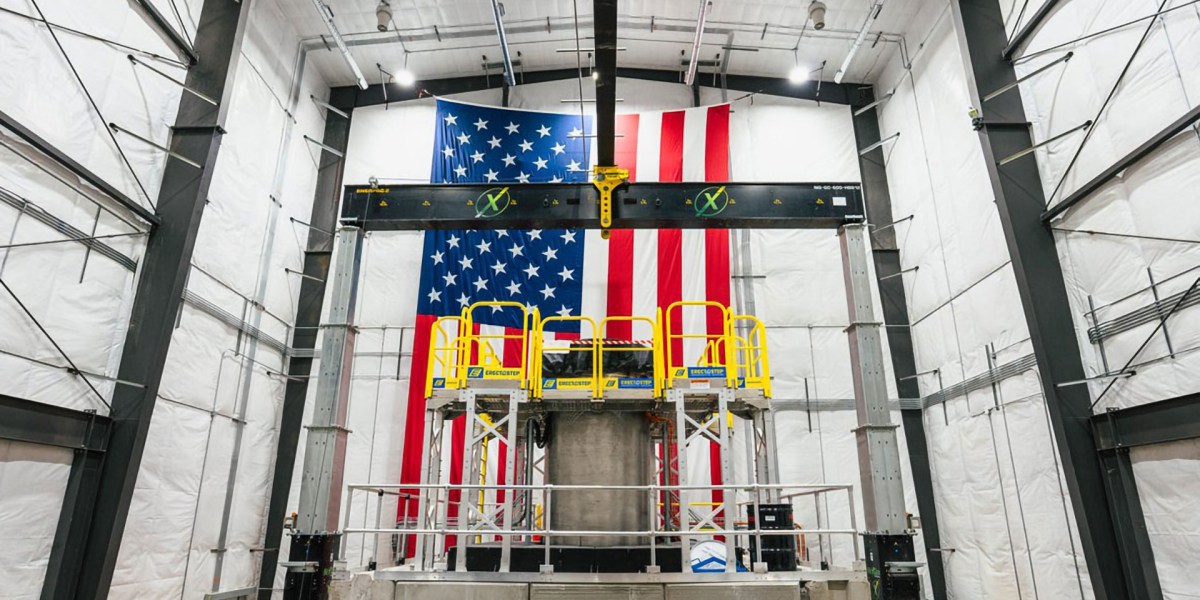
US Microreactors Achieve Criticality: Sustainable Energy for Future AI
Four new nuclear microreactors in the United States achieved criticality in July 2026, a significant milestone that opens new perspectives for artificial intelligence's energy demands. This development represents a step forward in the search for cleaner, more distributed energy solutions, essential for sustaining AI's growing computational power requirements.
What happened
In July 2026, as reported by MIT Technology Review AI, four new nuclear microreactors in the United States achieved criticality. This technical term indicates that a reactor is capable of sustaining a self-sufficient nuclear chain reaction, producing energy in a controlled manner. The event marks the achievement of an ambitious goal set by the then-Trump administration the previous year, which aimed to see at least three new microreactors reach this state by July 4, 2026.
These microreactors, unlike traditional large-scale nuclear plants, are designed to be smaller, modular, and faster to construct and deploy. Their compact nature makes them suitable for contexts requiring a localized and reliable energy source, with a reduced physical footprint and environmental impact. Their commissioning represents a crucial test for the feasibility and scalability of this emerging technology in the global energy landscape The Download: a nuclear landmark, and China eyes Nvidia chips.
Why it matters
This achievement has profound implications, especially for the artificial intelligence sector. The energy demand of AI systems, particularly large language models (LLMs) and generative AI, is constantly growing. Data centers hosting these technologies consume astronomical amounts of energy, contributing significantly to global carbon emissions if powered by fossil fuels. The availability of nuclear microreactors offers a low-carbon solution to meet this energy demand.
Microreactors can be deployed close to data centers or in remote areas, ensuring a stable and resilient energy source, reducing reliance on centralized and vulnerable power grids. This aspect is crucial for the security and operational continuity of critical AI infrastructures. Furthermore, the adoption of next-generation nuclear energy could stimulate the creation of new specialized jobs in the design, construction, management, and maintenance of these plants, influencing the AI future of work and beyond. The societal impact translates into greater energy reliability for essential AI-powered services, from healthcare to transportation, with potential benefits for quality of life.
The HDAI perspective
The vision of Human Driven AI places humans at the center of technological development, and this includes the responsible management of resources needed to fuel innovation. Energy is a fundamental pillar for ethical AI and sustainable development. Without clean and reliable energy sources, the progress of artificial intelligence risks exacerbating existing environmental challenges, contradicting the principles of responsibility and positive societal impact.
This development in nuclear microreactors highlights how AI governance cannot be separated from far-sighted energy governance. The availability of clean and reliable energy is fundamental to ensure that artificial intelligence can evolve responsibly and serve humanity, a central theme we will address at the HDAI Summit 2026. Italy, with its growing focus on Italian AI innovation, should closely monitor these solutions, evaluating their potential for a cleaner energy future and more sustainable AI at national and European levels.
What to watch
The next steps will involve the scalability of this technology, production costs, and public acceptance. It will be essential to assess how microreactors will integrate into existing energy grids and what regulatory and safety frameworks will be developed to manage their widespread adoption. Demonstrating their effectiveness and safety on a large scale will be decisive in determining their role in the global energy future and, consequently, in supporting the exponential growth of artificial intelligence.