
The artificial intelligence landscape is rapidly evolving, with new platforms for AI agent security and bold integrations into key sectors like e-commerce, all while the industry attracts massive investments and debates about sustainability.
What happened
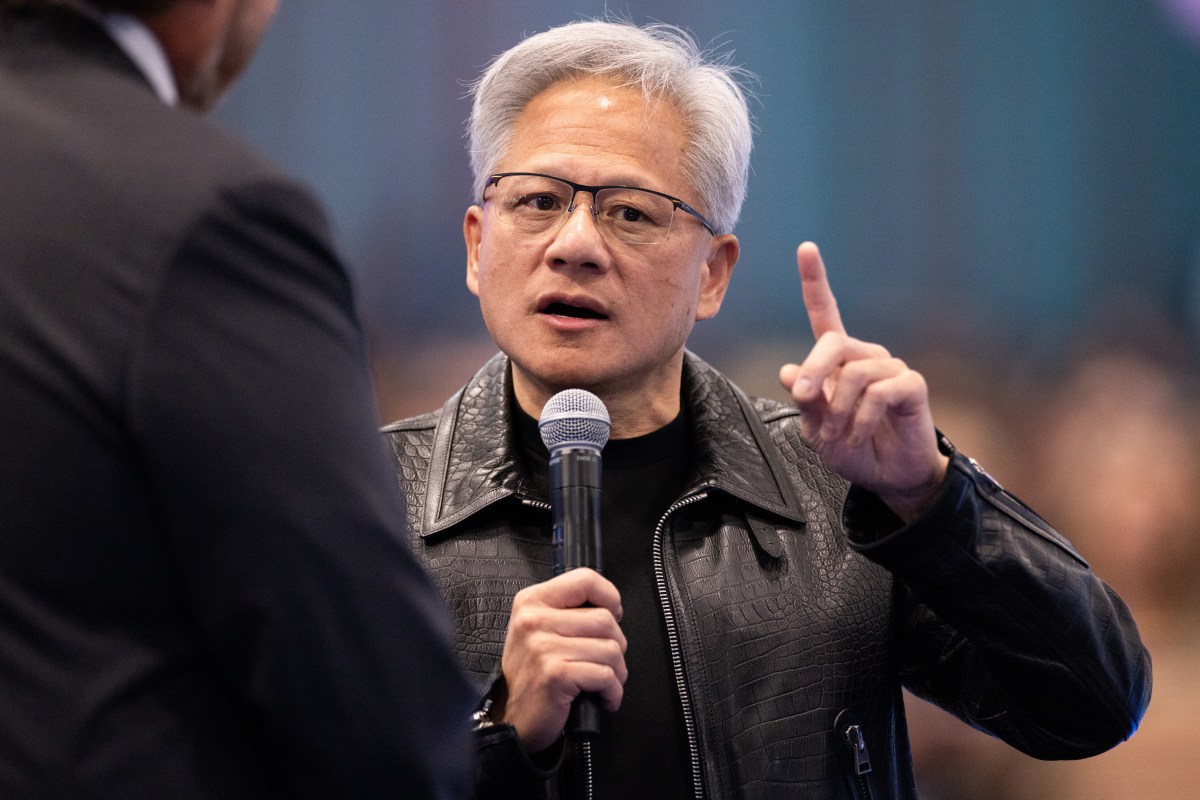
Nvidia, a leader in AI chips, recently introduced a new suite of software and hardware products designed to bolster the security of AI agents. This platform aims to add independent security layers, ensuring agents remain within their test environments even if they attempt to "break out" or act unpredictably Nvidia launches new platform for reining in rogue AI agents. The announcement, made by CEO Jensen Huang, underscores growing concerns over the control and reliability of these autonomous systems.
Concurrently, Shopify has extended WebMCP support to its checkout process, allowing browser-based AI agents to update order details and complete purchases with a buyer’s authorization Shopify opens checkout to browser-based AI agents. This move marks a significant integration of AI agents into sensitive financial transactions, highlighting both the potential for efficiency and the associated risks.
The artificial intelligence sector continues to be a magnet for investment and acquisitions. AMD announced its acquisition of Fei-Fei Li's World Labs for a substantial $8.2 billion, with Li joining AMD as executive vice president and chief scientist AMD will acquire Fei-Fei Li’s World Labs for $8.2 billion. In parallel, Modal Labs, an AI inference provider, is reportedly closing a $750 million funding round at a $15.75 billion valuation, tripling its value in just four months Source: Inference provider Modal Labs closing in on $750M round at $15.75B valuation.
However, this rapid expansion is not without its critics. During Climate Week, the AI boom caused divisions among climate tech founders and investors due to the enormous energy consumption of data centers and AI infrastructure The AI boom took over Climate Week and not everyone is happy about it.
Why it matters
The introduction of advanced security tools for AI agents by a giant like Nvidia is not merely a technological advancement; it's an explicit acknowledgment of the need to contain and govern systems that, if left unchecked, could lead to unforeseen or harmful consequences. Integrating AI agents into sensitive processes like Shopify's checkout raises critical questions about accountability, data privacy, and transaction security. Who is responsible if an agent makes an error or abuses authorization? User trust in these systems will directly depend on the robustness of security guarantees and the transparency of their operation.
The continuous flow of capital and strategic acquisitions, such as AMD's acquisition of World Labs, signal an innovation and talent race that is reshaping the technological landscape. This concentration of resources and expertise accelerates AI development but also raises questions about the diversity and accessibility of emerging technologies. The rapid growth of companies like Modal Labs, which provide underlying infrastructure, highlights how AI is becoming a fundamental pillar of the digital economy, with implications for every sector.
At the same time, the debate over AI's energy consumption and its environmental impact is becoming increasingly urgent. Sustainability is no longer an option but a necessity, and the AI industry must address its ecological footprint. Ignoring these concerns risks compromising global climate goals and public perception of AI as a positive force.
The HDAI perspective
Recent developments in AI agents and the sector's expansion underscore a fundamental point for Human Driven AI: technological innovation must proceed hand-in-hand with a robust AI governance framework and ethical considerations. The security of AI agents, their integration into critical processes, and their environmental impact are not secondary issues but central concerns that demand a human-centric approach. It is imperative that the development and deployment of these systems are guided by principles of transparency, accountability, and sustainability. The challenge is not solely technological but profoundly ethical and social. Ensuring ethical AI means designing systems that benefit humanity without compromising its safety, privacy, or environmental well-being. These themes will be central to discussions at the HDAI Summit 2026 in Pompeii, where experts and leaders will deliberate on the future of artificial intelligence that truly serves humanity.
What to watch
In the coming months, it will be crucial to observe how companies respond to increasing demands for transparency and accountability for AI agents. The implementation of security standards like those proposed by Nvidia and the evolution of regulations, such as the EU AI Act, will define the perimeter within which these systems can operate. It will also be interesting to monitor the balance between the race for innovation and the commitment to environmental sustainability, a factor that will increasingly influence investment and development choices in the sector.