
While the industry debates ethical AI and governance, five news items published on November 18, 2026 on Hacker News show an ecosystem experimenting with concrete solutions: photonic data centers, specialized agents, early autism diagnosis, and new rules for crawler access. At the center is the question of who truly benefits from innovation.
What happened
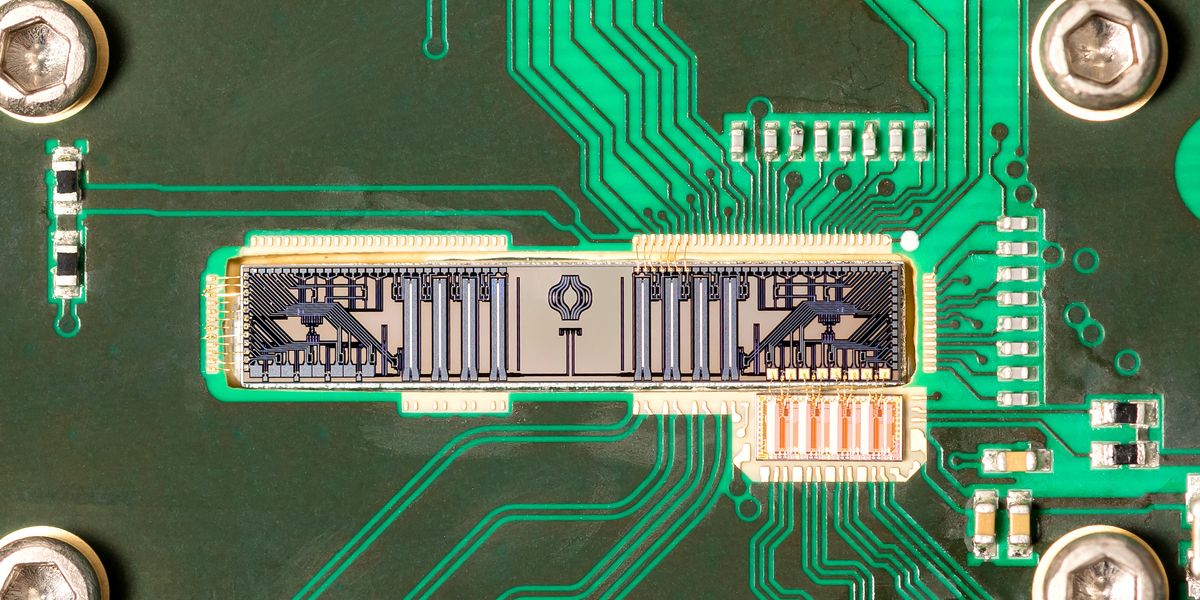
An article in IEEE Spectrum describes how optical data centers are gaining ground for training AI models. Photonics promises to reduce energy consumption and latency compared to traditional GPU clusters, a topic increasingly felt as demand for computation grows. The challenge, according to the analysis, is not only technical: it requires new production chains and skills.
On the skills front, a post on nlopes.dev discusses how to grow professionally in a world dominated by AI. The author argues that an engineer's value lies not in competing with models, but in orchestrating them, assessing their limits, and maintaining a big-picture view. A message that resonates with the debate on the AI future of work.
The third news item concerns Canvas Dx, an AI-based application for early autism diagnosis, presented in a video on Vimeo. The system analyzes behavioral signals to support clinicians in identifying at-risk children. It is an example of how AI for society can have a direct impact on people's lives, provided it is used as support and not as a substitute for medical judgment.
Finally, two contributions from the community: a GM Master Technician building a team of AI agents that communicate with each other (Oddity Forge) and the AI Access Index, which analyzes how 684 of the top thousand hostnames treat AI crawlers. The latter is crucial: it reveals that many sites are adopting restrictive policies, raising questions about transparency and access to information for models.
Why it matters
Taken together, these news items paint a picture where AI innovation is not just a race for computing power. Optical data centers emphasize environmental sustainability, a topic that concerns everyone: local communities, energy bills, corporate climate commitments. Engineers' professional growth touches the AI future of work: it is not just about automation, but about redefining roles and skills. Early autism diagnosis shows AI's beneficial potential in healthcare, but also the need for clinical validation and human oversight. Finally, crawler access is a question of power: those who control data control model development, and restrictive policies can favor incumbents.
The HDAI perspective
The lesson of this week is that ethical AI is not a brake on innovation, but a way to make it sustainable and inclusive. Optical data centers reduce energy footprint, but require investments and skills that risk concentrating power in the hands of a few players. AI agents collaborating with each other raise questions about responsibility and control: who is accountable if an agent errs? Early autism diagnosis is promising, but must be accompanied by algorithmic transparency and adequate clinician training. The AI Access Index, finally, reminds us that data governance is already in place, often opaquely. In this scenario, responsible AI requires open dialogue between companies, institutions, and civil society. This is the philosophy that inspires Human Driven AI and will be discussed at the HDAI Summit 2026 in Pompeii, where these topics will be addressed with experts and decision-makers.
What to watch
In the coming months, three developments deserve attention: the industrial adoption of optical computing, which could reshape the geography of data centers; European EU AI Act guidelines for AI-based medical devices like Canvas Dx; and the evolution of crawler access policies, which could lead to an increasingly fragmented web. The challenge will be finding a balance between innovation, rights, and sustainability. It is a path that concerns all of us, and that Human Driven AI will continue to follow closely.